

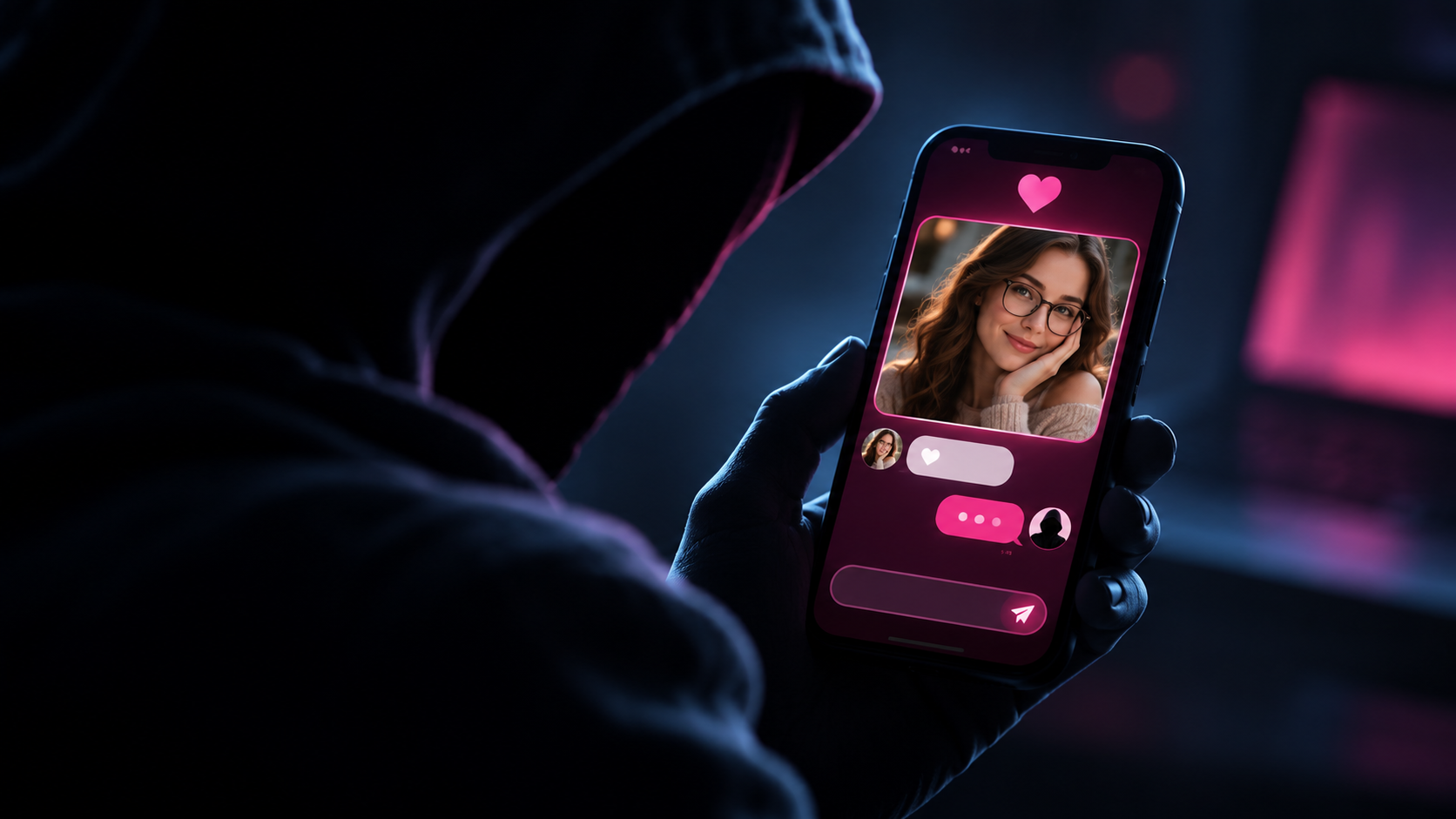
Not every stranger is a friend. Not every love story is real.
I have to be honest, I was struggling a bit with what I was going to write about for this post.
Well Lovelies, sometimes the opportunity just presents itself.
Today I wanted to write about relationship scams, or “pig-butchering scams” in particular. My recent close encounter with one, how to spot them, and how I used AI to thwart one.
What Are Pig-Butchering Scams?
Pig-butchering scams are a form of long-term financial fraud in which scammers build a relationship — romantic or otherwise — with their victims before persuading them to invest money in fake investment opportunities, usually involving cryptocurrency.
The name comes from the practice of fattening a pig before slaughter. Similarly, scammers spend weeks or even months gaining someone’s trust, often through dating apps, social media, messaging platforms or seemingly accidental wrong-number messages. They also sometimes work in teams, so the victim might genuinely believe they really are going to talk to a more influential person that they have been promised to be put in touch with.
Once a relationship has been established, the scammer introduces an investment opportunity, often showing convincing but fabricated profits through a fraudulent trading platform or website. Victims are encouraged to invest increasingly large sums, sometimes even borrowing money to do so.
The apparent profits are designed to encourage further investment, but when victims attempt to withdraw their money, they encounter excuses, additional fees or complete silence.
By then, their money is gone, and the person they thought they knew was never who they claimed to be.
Source: Metropolitan Police
My Story
I was approached randomly by “Lin Hui Ting” on Telegram, who claimed to be a fashion designer from Hong Kong. Hui Ting claimed to have me on her contacts, and I didn’t recognise the name, but I admitted that I talk to a lot of people in my work.
So we talked for a bit.
Hui Ting said that she would love to meet me; she said she’d been to the UK and we should grab coffee sometime. I told her that I prefer tea to coffee, but I was very careful not to give any personal information away.
One thing that stood out to me: Hui Ting’s replies were fast! Whole blocks of text appeared in seconds, and in perfect English, which made me suspect she may be an AI, or using AI to talk with me. But there’s no need to be rude. Hui Ting said she’s 32 and she’s from Hong Kong, where I know English is an official language. Perhaps she’s just particularly proficient?
Hui Ting sent me a photo of herself to see if I recognised her, and I said that she wasn’t familiar. At the same time, I couldn’t help but feel the photo looked remarkably AI-generated.
After some more conversation, Hui Ting asked to see a photo of me. Fortunately I trusted my instincts, and I asked ChatGPT to generate a replica of “me”.
I won’t share the image so that I can use it if another scammer tries me, and so that no scammer can pretend to be me, but the image that ChatGPT generated looked nothing like me at all.
But it was good enough for what I needed it. So, I sent it.
Hui Ting said that I was very pretty, she then said that the Telegram she was using was her business profile, and I should add her on her personal profile and chat more there. Hui Ting then sent me the link to another Telegram profile.
I didn’t click the link. Instead, I blocked and reported Hui Ting as a suspected scam. For me, the sequence of events, the automated feeling of our exchanges and her generated-looking photo were all massive red flags.
When I did a little digging into fashion designers with the name, Google couldn’t find her. Not even an online storefront with her name.
I wish I could say this was the first time I’ve been targeted by a scammer, it’s not. I’ve had “soldiers” send me long complimentary comments on Facebook several times, and I’ve blocked the profile every time. I’ve also seen my father-in-law nearly fall into the trap at least twice.
So now that I’ve shared my story with you, here’s how you can spot them, and how you can protect yourself from a relationship scam:
How To Spot A Relationship Scam
1. They Appear Out Of Nowhere
Perhaps it’s a comment on a Facebook post you commented on, or an “unknown number/forgotten friend” message on WhatsApp or Telegram. Scammers aren’t people you know; they’re people who appear randomly and act like they’ve known you all along.
2. They’re Friendly & Flirty
Scammers typically portray themselves as respectable people, for example, high-ranking soldiers, sailors, influencers and celebrities. They portray themselves as people you would feel honoured to connect with, making you lower your guard quickly. It’s not impossible, but think about most comments on posts. It’s highly unlikely that a stranger on a social media post will use that opportunity to hit on you, a complete stranger to them.
3. They’re Quick To Build a Connection
Pig-butchering scams rely on you trusting them and building a connection; they rely on you believing they are who they say they are. Their story may seem believable, but that doesn’t mean it’s real.
4. They Want To Move The Chat Elsewhere Very Soon
If you meet them on social media, they want to move to instant messaging platforms like WhatsApp or Telegram, or even premium websites. This helps them lower your guard, makes you believe you’re talking to who you think you’re talking to, and even hand you on to more experienced scammers.
5. They Send Stolen Or Generated Photos
Scammers never reveal their true identities. Instead, they use stolen or generated images that seem conceivable, that most people would readily accept. But look close enough, and you may even notice signs that an image has been generated with AI.
6. They Tell Emotional Stories, Or Encourage You To Invest
Scammers are cold, manipulative people who think nothing of tugging on your heartstrings for your money. They’ll tell you about a family member with terminal cancer or how they escaped conflict and are rebuilding their lives from scratch. Sometimes they’ll also tell you that they got rich with an investment scheme (like gold or cryptocurrency) and encourage you and support you through signing up. Once you’ve signed up, input your details and they’ve got your money, you’ll never hear from them again.
So now that you know the signs, how can you protect yourself from a relationship scam?

How To Protect Yourself From A Scammer
1. Be Realistic
Remember what I said about scammers portraying themselves as popular people? Sorry to break it to you, but if they seem too good to be true, they probably are. Scammers bank on you not trusting your judgement; they rely on you seeing them as an attractive, friendly person and wanting to get to know them better, privately. Trust your judgement, not theirs.
2. Never Send Photos
If you’re at all suspicious, don’t send your personal photos or selfies. Scammers sometimes use stolen profile pictures to target other people, and sometimes even whole photo albums to create false lives, which can have implications for you if someone thinks you were the person who scammed them. If you’re suspicious, don’t send a photo. Most scammers won’t care about the excuse you give, because it’s not really your photo they’re after.
3. Adjust Your Search Privacy Settings On Private Apps
Scammers often target leaked numbers, and they sometimes share “hot” (active) numbers between themselves until somebody hopefully finds their way in and gets access to your money. To help prevent it, adjust your settings on Telegram and WhatsApp so that only your contacts can search for you, add you to groups and see your profile pictures (on WhatsApp). For added security, make sure you enable two-factor verification as well.
4. Never Click Links They Send To You
Even if it looks like a harmless profile, do not click any links from a suspected scammer. Some of them are links to malicious websites which install spyware on your device that can track your keystrokes and steal your data. If you don’t trust the link, never click on it.
5. Use A Strong Password (And Don’t Share It!)
It frightens me how many people use something really obvious for their password, like Password123456 or Passw0rd! — those are exactly the kinds of passwords scammers think to check. Use a password manager with a generated password, and always use two-factor verification.
Oh, and while we’re here, hopefully this is obvious… But never tell anyone what your password is!
6. Never Share Your Banking Details
Some people trust too easily and listen, I hear you, I see you. I see that you want to help people and make a difference to the world, but scammers see you too, and they don’t care about “doing the right thing” — the “right thing” to them is fleecing your bank account for your hard-earned money.
Never send your bank card details or any personal banking information to people or websites you don’t trust. They may send you money… then send you a fraudulent chargeback shortly afterwards.
Finally, never assume a website is legitimate just because it has a padlock symbol — scammers can create fraudulent websites with encrypted connections too. Always check the actual website address and, where possible, access financial services through their official website or app rather than a link that someone has sent to you.
7. Don’t Be Afraid To Ask For Help
If you suspect you’ve been targeted by a scammer, don’t be embarrassed. These people are professional manipulators, and their tactics are designed to exploit trust. Being targeted by a scammer doesn’t make you foolish, gullible or naive. Anyone can be targeted, regardless of age, education or experience. If you’ve been targeted, there’s no shame in asking for help.
Stop communicating with them, don’t send any money, and report the account to the platform.
If you’ve shared financial information or transferred money, contact your bank immediately. In the UK, you can also report fraud through Report Fraud.
Also, be particularly wary of anyone subsequently offering to recover your lost money for a fee — recovery scams often target previous victims.
I hope this post helps you stay informed and stay safe. Have you experienced a relationship scam before? Share your story in the comments and let’s help one another stay safe, or read more of my Relationships & Sex posts.
Until next time!
Stay safe & have fun,

Pledge Your Allegiance To The Queen
Whether you’d like to show off your devotion, indulge my creative endeavours, or simply help keep the mischief going, there are a couple of ways you can spoil me!
👑 Visit Our Merch Shop – Show your allegiance with a little branded merchandise.
🎁 Enter My Throne Room – Fancy treating me? Take a peek at my wishlist and demonstrate your devotion!
Every little bit of support helps keep Ten Shades & Me alive, kicking, and delightfully inappropriate.
Thank you, Lovelies! ❤️
Related Posts
 Dating Naked: A Naturist On Finding Love In The Buff
Dating naked might mean baring your body, but finding love requires something much harder: vulnerability,…
 UNION Protocol Review: The App Where Intimacy Becomes Ritual
Discover our UNION Protocol relationship app review, exploring BDSM features, D/s dynamics, chastity tracking, privacy,…
 The Goddess Diaries: A Fly-By
Still submissive, still defiant, and still causing trouble — but perhaps I’m finally learning that…
 Disobedience: My Break-Up With The Obedience App
All good things must come to an end. Why I'm ending my partnership with the…
- Obedience Check-In: July 2026
How Obedient have I been lately? Here's a look back at my submission over the…


Leave a Reply